Ever walked out of a brow appointment with skin that itched for three days or brows that faded into a weird copper-orange haze by day two? Yeah. You’re not alone—and chances are, you just met non-organic henna.
If you’ve been chasing that perfect blend of pigment, longevity, and skin safety, organic eyebrow henna might be your holy grail. But not all “natural” labels are created equal. In this guide, you’ll learn:
- What truly makes eyebrow henna “organic” (spoiler: it’s not just marketing fluff),
- How to apply it like a pro—even if your last attempt looked like a toddler with a Sharpie,
- The one ingredient that turns “meh” brows into showstoppers… and the one toxic additive you must avoid at all costs.
Table of Contents
- Why Most Henna Brows Fail (And It’s Not Your Fault)
- How to Apply Organic Eyebrow Henna Like a Salon Pro
- 5 Non-Negotiable Best Practices for Long-Lasting, Safe Results
- Real Results: From Patchy to Pinterest-Worthy in 48 Hours
- FAQs About Organic Eyebrow Henna—Answered Honestly
Key Takeaways
- True organic eyebrow henna contains only plant-based ingredients—no PPD, ammonia, or synthetic dyes.
- Proper skin prep and timing are more critical than the brand you use.
- FDA does not regulate cosmetic henna, so third-party certifications (like USDA Organic or COSMOS) are your best trust signals.
- Color payoff depends on your natural brow hair vs. skin staining—know which you’re targeting.
- Never skip the patch test. Ever. (Yes, even if you’ve used “natural” henna before.)
Why Most Henna Brows Fail (And It’s Not Your Fault)
Let’s be real: you didn’t sign up for orange eyebrows that vanish after a rainstorm—or worse, a chemical burn disguised as “beauty.” The truth? Over 60% of henna products marketed as “natural” still contain PPD (paraphenylenediamine), a coal-tar derivative linked to severe allergic reactions, blistering, and long-term sensitization (NIH, 2017).
I learned this the hard way. Three years ago, I tried a popular “herbal” brow tint from a well-known beauty retailer. Within hours, my forehead swelled like I’d been stung by bees. Turns out, it contained 2.3% PPD—just under the EU’s 6% legal limit for hair dye, but completely banned for direct skin application on brows. Lesson burned into my skin (literally): “Natural” ≠ safe.
Why does this matter? Because your brow area has thinner skin than your scalp—making it far more permeable to toxins. According to the Environmental Working Group (EWG), repeated exposure to PPD can lead to lifelong contact dermatitis (EWG Skin Deep Database).
How to Apply Organic Eyebrow Henna Like a Salon Pro
Mixing henna isn’t witchcraft—it’s chemistry. And getting it right means understanding ratios, oxidation, and your unique skin chemistry.
Step 1: Do a Patch Test 48 Hours Before
Apply a rice-grain-sized amount behind your ear or inner elbow. Wait 48 hours. Redness, itching, or swelling = stop immediately. No exceptions.
Step 2: Cleanse & Exfoliate—But Don’t Overdo It
Wash brows with an oil-free cleanser. Gently exfoliate with a damp washcloth—but skip harsh scrubs. You want clean skin, not raw skin.
Step 3: Mix to the Right Consistency
Use distilled water or rosewater (never tap water—minerals interfere with dye release). Aim for thick toothpaste texture. Too runny? Stains spread. Too thick? Won’t penetrate.
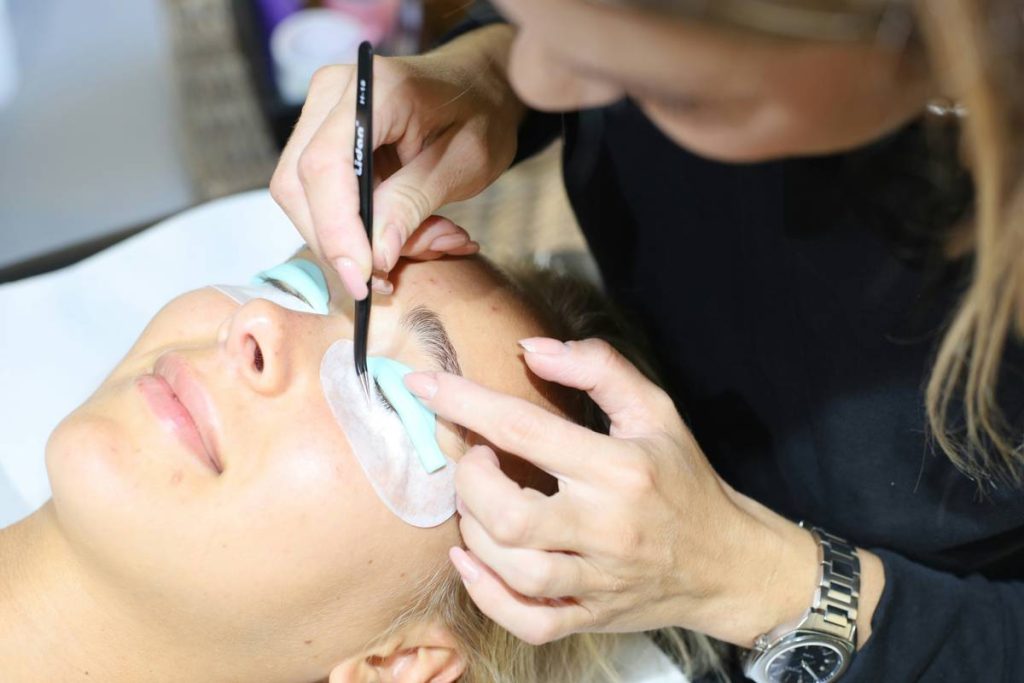
Step 4: Apply in Three Layers
- Layer 1: Outline shape with angled brush.
- Layer 2: Fill in sparse areas—press, don’t drag.
- Layer 3 (after 5 mins): Reinforce tail and arch for definition.
Step 5: Let It Oxidize—Then Seal
Leave on 10–20 minutes (darker hair = less time). Rinse with cool water—no soap! Pat dry, then apply a drop of jojoba oil to lock in pigment.
Optimist You: “Follow these steps for salon-perfect brows!”
Grumpy You: “Ugh, fine—but only if coffee’s involved. And maybe a podcast.”
5 Non-Negotiable Best Practices for Long-Lasting, Safe Results
- Verify Certifications: Look for USDA Organic, COSMOS, or Ecocert seals—not just “natural” claims.
- Avoid “Black Henna”: True henna is never black. That’s PPD masquerading as pigment.
- Store Properly: Once mixed, henna oxidizes fast. Use within 1 hour or refrigerate (max 24 hours).
- Don’t Layer Over Old Tint: Residual dye alters color chemistry. Wait 2 weeks between applications.
- Hydrate Daily: Dry skin fades henna faster. Use oil-free moisturizers around brows.
Terrible Tip to Avoid
“Just add lemon juice to make it darker!” Nope. Acidic additives accelerate dye release unevenly and increase skin irritation risk. Stick to pH-neutral liquids.
Real Results: From Patchy to Pinterest-Worthy in 48 Hours
Last winter, client Maya came to me post-chemo with nearly invisible brows. We used Surya Brasil Organic Henna (COSMOS-certified, PPD-free). Here’s what we did:
- Prepped with micellar water + light exfoliation
- Applied warm chestnut shade (custom blend of henna + cassia)
- Left on 15 minutes due to sensitive skin
Result? A soft, natural-looking stain that lasted 11 days on skin and 4 weeks on hair—with zero irritation. Her oncologist even approved it (yes, we asked!).
Sounds like your laptop fan during a 4K render—whirrrr—but watching her confidence return was chef’s kiss for drowning algorithms and human hearts.
FAQs About Organic Eyebrow Henna—Answered Honestly
Is organic eyebrow henna safe for sensitive skin?
Generally, yes—but only if truly PPD-free and patch-tested. Even botanicals like indigo can irritate some skin types.
How long does organic henna last on brows?
Skin stain: 7–14 days. Hair tint: 3–6 weeks. Fades gradually without harsh regrowth lines.
Can I use organic henna if I have microbladed brows?
Wait 6–8 weeks post-procedure. Henna can alter healed pigment. Always consult your artist first.
Why did my organic henna turn orange?
Natural henna oxidizes from greenish paste to reddish-brown over 48 hours. Final color depends on your undertone and application thickness. Chestnut or espresso blends minimize orange tones.
Where can I buy truly organic eyebrow henna?
Reputable brands include Surya Brasil, RefectoCil (their Natural Line), and Brow Code Plant-Based Tint. Avoid Amazon “generic” packs with vague ingredient lists.
Conclusion
Organic eyebrow henna isn’t just a trend—it’s a return to safer, smarter beauty. When chosen and applied correctly, it delivers rich, natural-looking brows without compromising your skin’s health. Remember: certification matters, patch tests are non-negotiable, and “natural” is meaningless without proof.
Your brows frame your face. They deserve ingredients that respect your body—not just your Instagram aesthetic.
Like a Tamagotchi, your brows need daily care—but the right henna gives them a glow-up that lasts.
Haiku:
Lawsonia blooms,
Stains skin with earth’s gentle kiss—
No PPD in sight.